


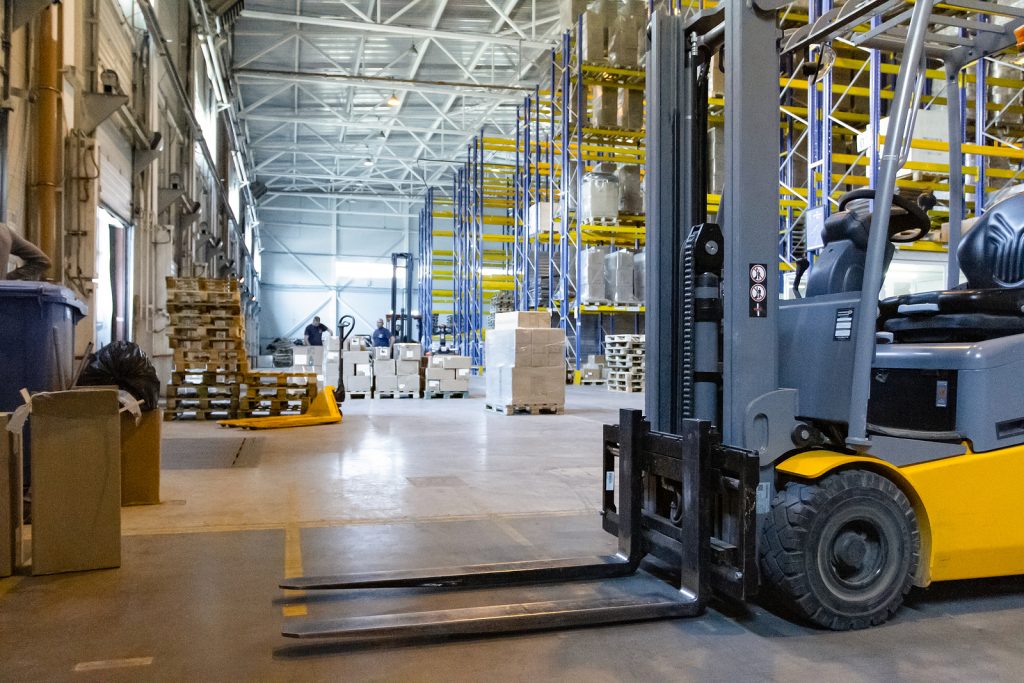
The origins of the forklift truck, one of the most widely used and versatile pieces of plant machinery, involve a fascinating evolution from makeshift tools meant for a specific internal role to the highly versatile machines familiar to businesses today.
The origins of the forklift are somewhat accidental, with the first machine close to a forklift sold expressly to move heavy goods from one part of a worksite or shop floor to another being the Clark Tructractor in 1917.
However, a decade before this, an even earlier battery-powered prototype was developed for an even more specific purpose to make a long-standing transport issue even easier.
The baggage wagon was a vital piece of equipment on the early railroads, as it allowed for large luggage cases to be moved around with relative ease from a car or carriage to a train and vice versa.
However, the problem with these early carts is that they were manually operated and manually powered, meaning that there was a limit to the amount of weight that could be moved around at any one time.
The solution to this was developed by the Pennsylvania Railroad Company in Altoona, Pennsylvania.
By attaching a storage battery and electric motor to an existing baggage wagon, employees could more easily and quickly move vast amounts of cargo from one part of the railway station to another.
Whilst the control setup was far from ideal, requiring an operator to walk in front of the unit in order to ensure it kept going in the right direction, it was a remarkable early achievement in the field of materials handling.
The system proved remarkably influential, inspiring early electric and petrol-powered carts such as the Tructractor.
Sadly, other than its existence, little is known about the electric baggage wagon, which launched a generation of forklift trucks, but its influence will endure despite this.